
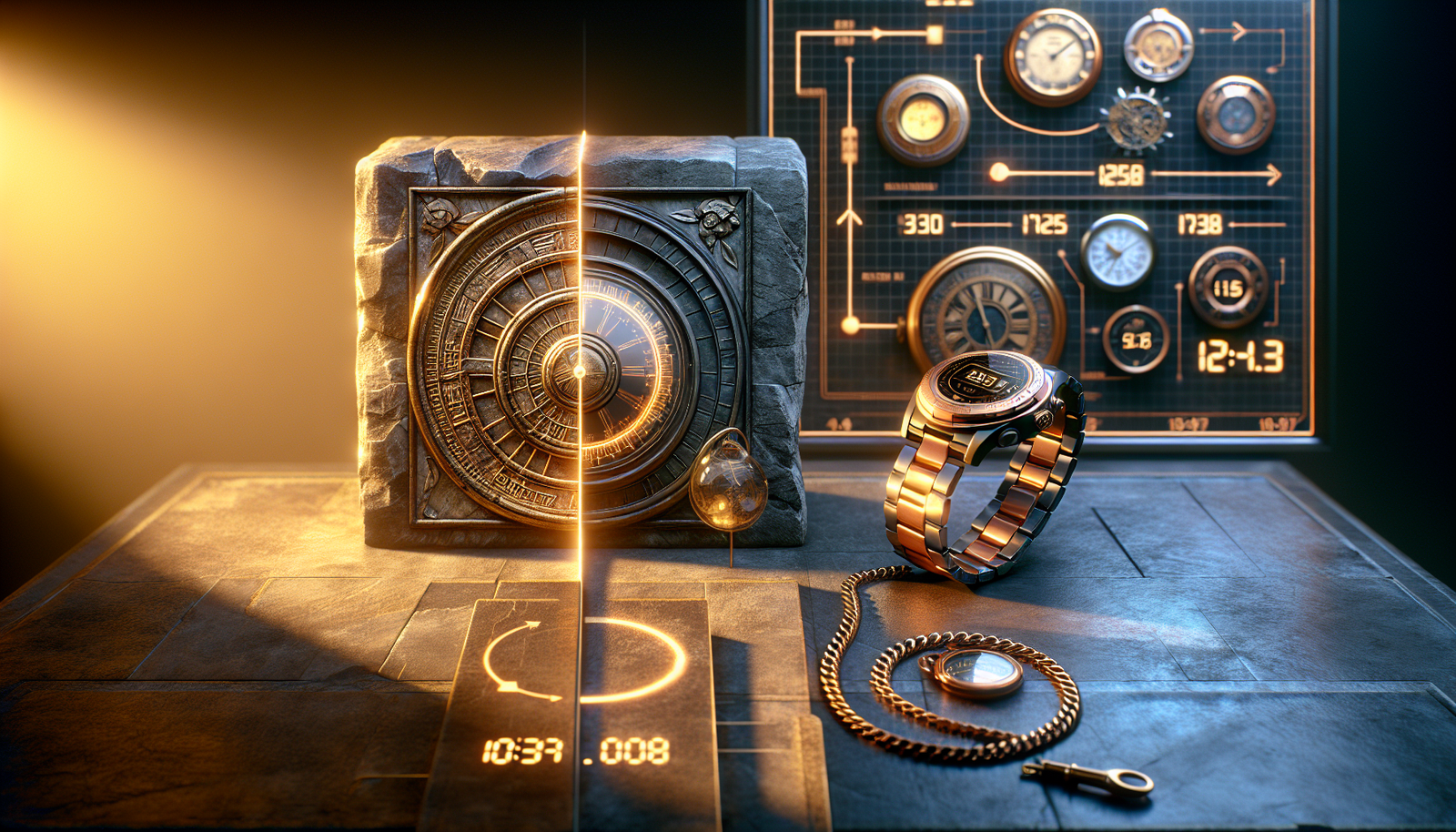
The Evolution of Timekeeping: From Ancient Methods to Modern Wearable Tech
Time has always been a fascinating concept for humanity. From our earliest ancestors using natural elements to track the day, to the high-tech smartwatches we wear today, the journey of timekeeping is a reflection of human ingenuity and adaptation. In a world where astrology often connects celestial movements with life on Earth, understanding how we measure time can also provide insights into our experiences, behaviors, and even relationships.
As we explore the fascinating transformation of timekeeping, we see not just the evolution of technology, but how these advancements impact our daily lives and our understanding of time itself. From the sundials of ancient civilizations to the sleek smartwatches on our wrists today, this blog post will traverse through the history of timekeeping, highlighting its astrological significance, and discussing how our perception of time has changed through the ages.
The Beginnings of Timekeeping: Sundials and Shadows
The first recorded methods of keeping time date back to ancient civilizations. Sundials were among the earliest devices used to measure time during the day. These devices relied on the position of the sun and the shadows it cast.
- Sundials in Ancient Egypt: Egyptians created one of the first sundials around 1500 BC. They marked the hours based on the sun’s shadow.
- The Greek Influence: The Greeks improved the sundial design, introducing the gnomon, which is the triangular blade that casts a shadow.
- Astrological Connections: In astrology, the sun represents our core identity and ego. Thus, sundials not only served a practical purpose but also held significance in understanding oneself in relation to time.
The Inventiveness of Water Clocks
As civilizations evolved, so did the technologies of timekeeping. Water clocks, or clepsydras, made their appearance around 400 BC. They measured time through the flow of water, giving us a more consistent measurement than sundials.
- Innovation Across Cultures: Chinese, Greek, and Indian cultures independently developed water clocks, showcasing the shared human quest to measure time.
- Astrological Reflections: Water was seen as an essential symbol in astrology; it represents emotions and intuition. The accuracy of water clocks may have allowed sages to align activities with astrological events.
The Mechanical Revolution: Hourglasses and Early Clocks
By the Middle Ages, the need for more precise timekeeping gave rise to hourglasses and mechanical clocks. The hourglass was a significant advancement, using sand to measure short periods accurately.
- Clock Towers: The first public clocks appeared in the 13th century, marking time for entire communities. This development changed how people structured their day around the clock.
- Astrology and Time Management: Astrology began to play a more significant role in people’s lives during this period. Astrologers sought to align their readings and predictions based on precise timings.
Wrist Watches: Time on the Go
The 16th century ushered in a new era with the invention of wristwatches. Initially worn by women as decorative pieces, they quickly became a practical accessory for men as well.
- Technological Improvements: By the 19th century, wristwatches had become common, thanks to advancements in precision engineering.
- Astrological Timing: With the introduction of pocket watches and wristwatches, astrologers could time events like transits and celestial movements more accurately, enhancing their practice.
The Digital Age: From Analog to Smart Technology
The late 20th century saw a significant shift with the introduction of digital watches. As technology advanced, so did the capabilities of watches, evolving to smartwatches that can track more than just time.
- Integration with Health: Modern smartwatches now offer features like heart rate monitoring and fitness tracking, intertwining health awareness with time management.
- Astrology Apps: With the rise of smartphones, astrology apps provide real-time astrological insights, allowing users to align their activities with cosmic events right from their wrists.
The Astrological Significance of Timekeeping
Throughout history, timekeeping devices have reflected human culture. Understanding time and its cycles is integral to astrology. The positions of celestial bodies at the exact moments of our birth shape our personalities and life paths.
- Planetary Hours: In astrology, timekeeping is crucial for calculating planetary hours, which can influence activities and decisions.
- Lunar Phases: Timing events according to lunar phases can enhance outcomes, further emphasizing the need for accurate timekeeping.
Modern Timekeeping: What Lies Ahead
With rapid advancements in technology, the future of timekeeping is bright. From atomic clocks to wearable tech, our understanding and management of time will continue to evolve, potentially influencing various aspects of our lives.
- Quantum Clocks: These are expected to revolutionize timekeeping with extreme accuracy, potentially affecting how we plan astrological events.
- Increased Integration: Smartwatches may further integrate astrological technology, allowing individuals to receive real-time insights based on their activities.
Conclusion: The Timeless Journey of Timekeeping
The journey of timekeeping is not just about devices; it’s about how our perception of time shapes our existence. From sundials that connected us to the sun to smartwatches that provide instant access to astrological wisdom, time has continuously adapted to our needs.
As we move further into the digital age, the ways we understand and measure time will only deepen, offering new opportunities to connect with astrological insights. Whether you’re an astrology enthusiast or just looking to better manage your daily activities, embracing the evolution of timekeeping will undoubtedly enrich your experience of life.
In reflecting on how far we’ve come, let us appreciate the next tick of the clock and ponder how time, with all its mysteries, continues to guide our paths.