
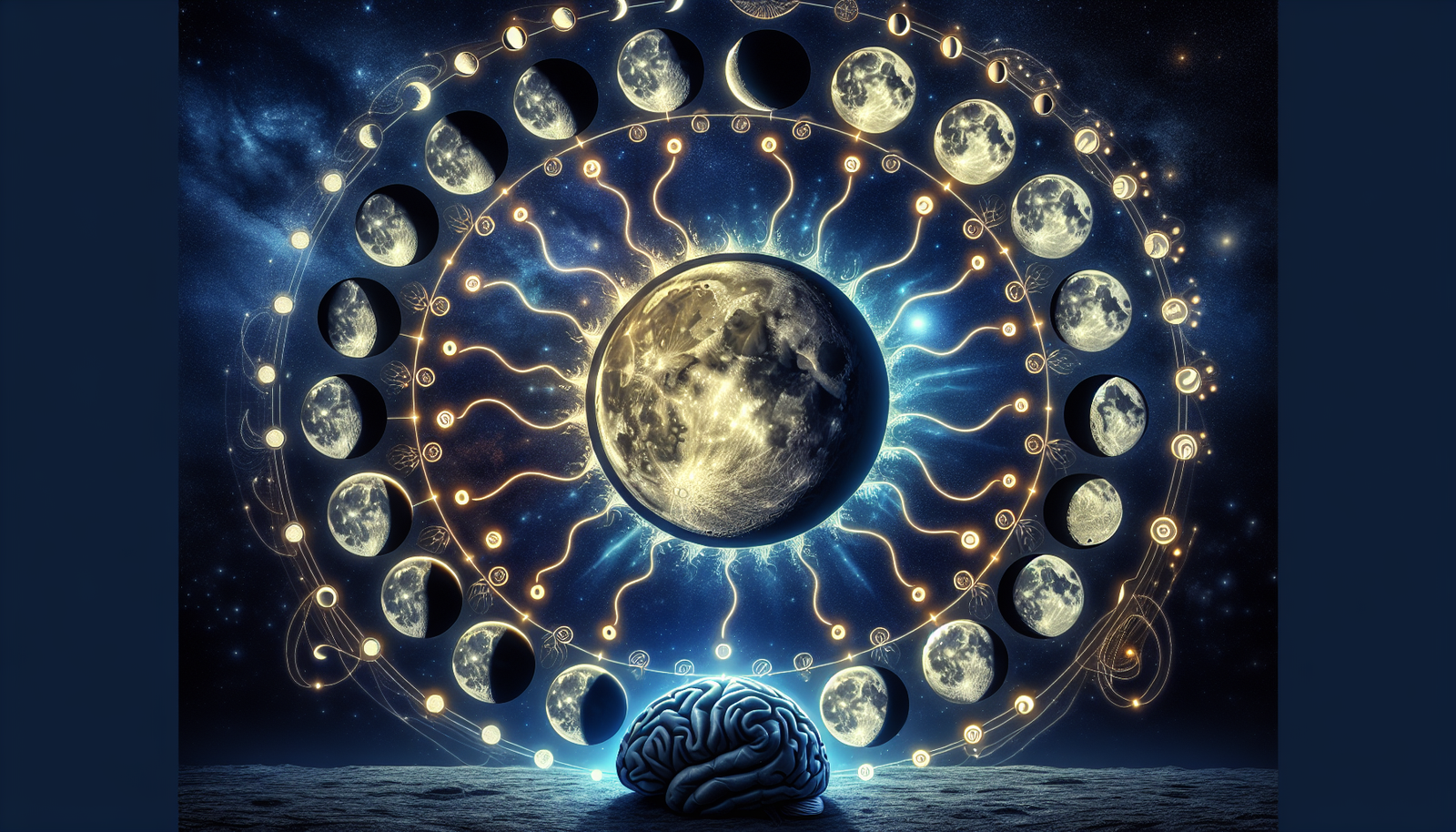
Have you ever felt a shift in your emotions around the time of a full moon? Or maybe you’ve noticed that your sleep patterns change during certain lunar phases? Many people believe that the moon has a profound impact on our mental health and well-being. In this blog post, we will explore the connection between moon phases and mental health. We’ll delve into how the lunar cycle may influence our emotions, behaviors, and overall mental health.
The Lunar Cycle Explained
The lunar cycle consists of eight distinct phases, beginning with the new moon and culminating in the full moon. Each phase has its unique energy and characteristics:
- New Moon: A time for new beginnings and setting intentions.
- Waxing Crescent: Growth and optimism as we begin to see light.
- First Quarter: Taking action and making decisions.
- Waxing Gibbous: Refining and adapting our plans.
- Full Moon: A peak of energy, emotions, and often a time for release.
- Waning Gibbous: Reflection and gratitude for what we’ve achieved.
- Last Quarter: Letting go and detoxifying our lives.
- Waning Crescent: A quiet time for introspection and rest.
Understanding these phases can help you align your activities and mindset with the moon’s energy.
The Science Behind Lunar Influence
While many of us may feel intuitively connected to the moon, scientific studies exploring this connection yield mixed results. Here are some key points to consider:
- Some studies suggest that the full moon can enhance sleep disturbances, while others find no significant impact.
- Research has shown that people may feel more emotional around a full moon, possibly due to increased light at night and its impact on our natural circadian rhythms.
- The gravitational pull of the moon is known to affect ocean tides; some believe it could also influence human behavior and emotions.
In summary, while science may not provide conclusive evidence of a lunar influence on mental health, there is a wealth of anecdotal evidence supporting the connection.
Moon Phases and Emotional Impact
Different lunar phases can evoke distinct emotional responses. Let’s break down how each phase may affect mental health:
- New Moon: A period for setting intentions, the new moon can uplift your spirit and provide motivation for change.
- Waxing Crescent: As the moon grows, so does optimism. You may feel more energized and ready to tackle new challenges.
- First Quarter: The urge to make decisions can be strong. Confidence often surges during this phase, making it an excellent time for action.
- Waxing Gibbous: This phase is about refinement. You may find yourself re-evaluating your goals, leading to increased mental clarity.
- Full Moon: A time of heightened emotions, full moons can lead to stress or anxiety but also offer a chance for emotional release.
- Waning Gibbous: As the moon lightens, reflection and gratitude can help ease post-full moon anxieties, leading to feelings of contentment.
- Last Quarter: This phase invites letting go and healing. It’s a time for detoxifying both mentally and emotionally.
- Waning Crescent: A calming phase that signals rest and introspection. It’s a good time to recharge before the new moon cycle begins again.
Practical Tips for Mental Health During Different Moon Phases
To harness the energy of the moon phases, consider these practical tips:
- New Moon: Take time to set goals and visualize your aspirations.
- Waxing Crescent: Engage in activities that boost your energy and enthusiasm, like exercise or creativity.
- First Quarter: Make decisions confidently; there’s strength in action.
- Waxing Gibbous: Reflect on your progress and make adjustments to stay on track.
- Full Moon: Set aside time for self-care. Journaling about your feelings can help release pent-up emotions.
- Waning Gibbous: Cultivate gratitude by listing things you’re thankful for, which can help soothe any anxiety.
- Last Quarter: Engage in activities that foster release, such as meditation or purging physical spaces.
- Waning Crescent: Prioritize rest and relaxation; quiet activities like reading can be beneficial.
Reflecting on Personal Experiences
Many people report feeling a connection between their mood and the phases of the moon. Keeping a journal can help you track your emotional state throughout the lunar cycle:
- Note how you feel during each phase.
- Record any significant events or changes in your mental health.
- Look for patterns that emerge over time.
This kind of reflective practice can enhance your self-awareness and improve your mental health by aligning your actions with your inner needs.
Community and the Moon’s Influence
The moon has been a source of inspiration and connection for cultures around the world. Many communities celebrate full moons or new moons with rituals and gatherings, fostering a sense of belonging. Being part of a community that shares lunar observations can also greatly benefit your mental health:
- Participate in moon rituals or full-moon gatherings.
- Engage in discussions about emotions and mental health during moon phases.
- Create a support network around lunar cycles and personal growth.
This community aspect can provide added encouragement and accountability for your well-being and personal development.
Conclusion
While science may not fully explain the connection between moon phases and mental health, many people find that their emotional states ebb and flow with the lunar cycle. By understanding the unique energy attributed to each phase, you can harness this influence to enhance your mental health and well-being.
Whether it’s taking time to set intentions during the new moon or practicing reflection and release during the full moon, integrating lunar awareness into your life can be a rewarding journey. So, next time the moon shines brightly in the sky, consider how its phases may be impacting your mind and spirit. Embrace the natural rhythms and allow the moon to guide you towards a more balanced mental state.